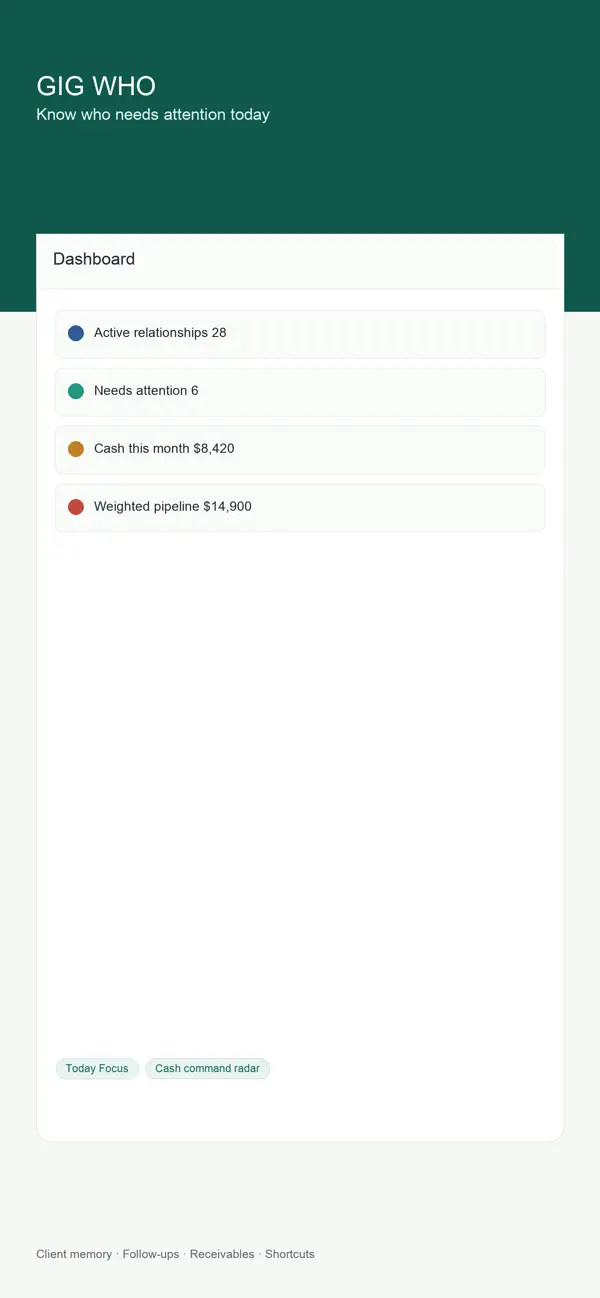
GIG WHO
iOS Universel / Economie et entreprise
GIG WHO is a lightweight CRM built for solo workers who win business by remembering clients, following up on time, and keeping cash from slipping through the cracks.
Version 1.4 adds a Receivables Command Center. It turns invoices, completed jobs, and unpaid balances into an aging report with fresh, watch, late, and critical buckets. The dashboard now shows the oldest open balance so you know exactly where to start.
Inside GIG WHO you can:
- Create client profiles with notes, tags, statuses, and preferred contact methods
- Log calls, texts, meetings, quotes, invoices, payments, and project milestones
- Track quoted value, paid value, open balances, and lifetime revenue
- See receivables aging and a prioritized collection queue
- Set follow-up reminders and get nudges when a lead, quote, or client goes cold
- Save human details that help you feel prepared before reaching out
- Use Today Focus to see the most important people to contact
- Track mileage, service catalog items, quote conversion, income goals, and client health
- Use widgets, Shortcuts, Spotlight, and optional iCloud sync to keep the CRM close
- Export tax-year and client records for your own bookkeeping
GIG WHO stays intentionally focused:
- No required account
- No ad SDKs
- No analytics or tracking
- No subscription gate
- No server account required to use the app
Optional permissions power optional features such as contact import, nearby-client routing, voice capture, notifications, and Face ID locking.
Quoi de neuf dans la dernière version ?
**Receivables Command Center** - New aging report for open balances, with Fresh, Watch, Late, and Critical buckets.
**Oldest balance on Home** - Cash command radar now shows the top collection target so you know where to start.
**Priority collection queue** - Insights now lists the oldest and largest open balances first.
**More reliable reporting** - Receivables math is now part of the CRM engine and covered by unit tests.
**Updated support and privacy links** - App Store metadata and in-app settings now point to the current Shadowfetch support pages.